
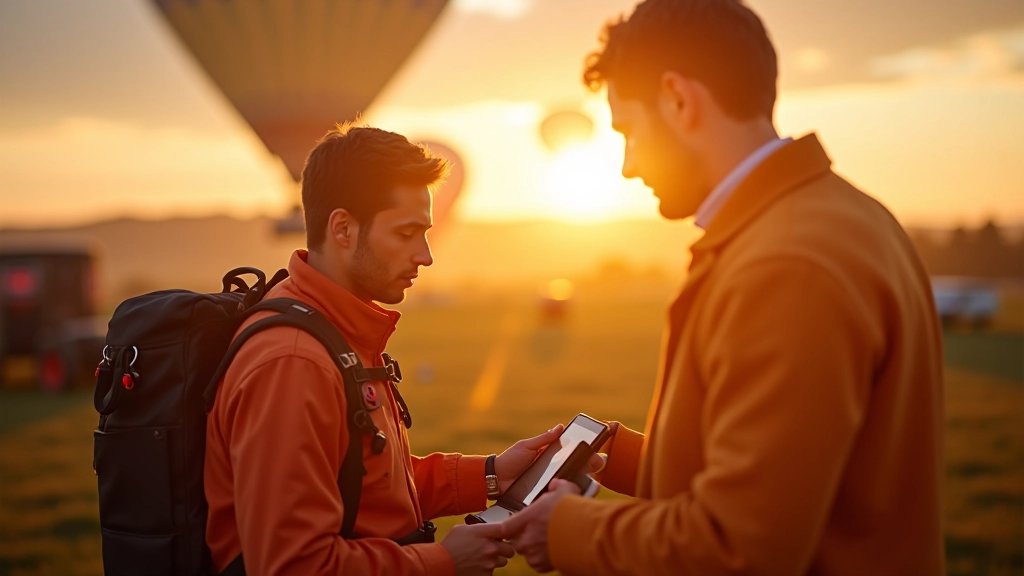
How Weather Affects Your Flight Plans
Understanding wind patterns, temperature inversions, and seasonal conditions that impact your balloon experience.
Read More
A complete walkthrough from arrival to champagne celebration. We'll break down every moment so you know exactly what happens when you step into the basket.
Your first sunrise flight isn't something you just experience—it's something you'll remember. But there's nothing mysterious about it. We're going to walk you through the entire experience, from the moment you arrive at our launch site to when you're sipping champagne with your feet back on solid ground.
The flight itself takes about an hour aloft, though you'll want to arrive 90 minutes early for the pre-flight process. That's when the real adventure begins.
You'll arrive at our launch site around 5:30 AM for a sunrise flight. Yes, that's early. But that's when the sky looks best—soft colors, minimal wind, and the world still quiet below you. Our team will greet you with coffee and pastries while you settle in.
The briefing takes about 20-30 minutes. Your pilot covers safety procedures—how to brace during landing, where to position your feet, what to hold onto. It sounds formal, but it's really just practical information. You'll also learn basic balloon facts: how the burner works (it's loud, don't worry), why we ascend and descend, and what you might see at different altitudes.
Most people are nervous at this point. That's completely normal. Our pilots have flown thousands of hours. They've trained extensively for weather changes, emergency procedures, and passenger comfort. You're in experienced hands.
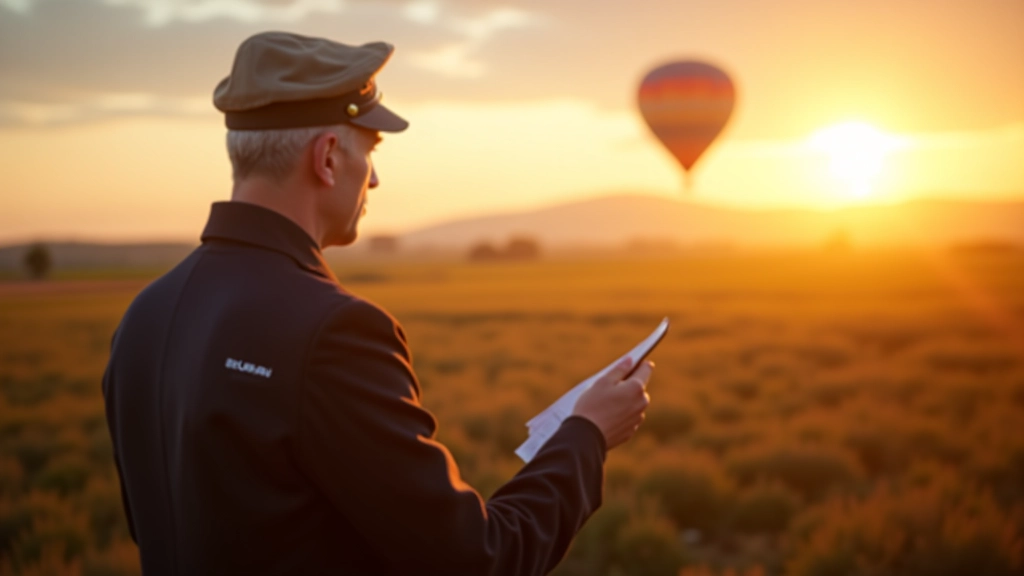
"The moment the burner fired and we lifted off the ground—that's when it hit me that this was actually happening. There's no sensation like it."
— Elena, first-time flyer, August 2025
The balloon sits on the ground in a horizontal position. You'll help the crew position it, then climb into the basket. There are four passengers plus your pilot in our standard basket—cozy but never cramped. The basket itself is made of wicker, which flexes slightly during flight. That's intentional. It absorbs impact during landing.
When the pilot fires the burner, you'll hear a roar—genuinely loud, like a jet engine for three to five seconds at a time. The flame shoots up into the balloon's envelope, heating the air inside. You'll feel gentle upward movement, not a jolt. Within 30 seconds you're 50 feet up. Within a minute, you're clearing the tree line.
The ascent is gradual and smooth. There's no turbulence, no stomach-drop sensation. Many first-timers expect to feel scared, but most people describe it as peaceful instead. You're moving with the wind, not against it.
Understanding wind patterns, temperature inversions, and seasonal conditions that impact your balloon experience.
Read More
The history behind the champagne ceremony, what's included in your celebration, and why it's part of the experience.
Read More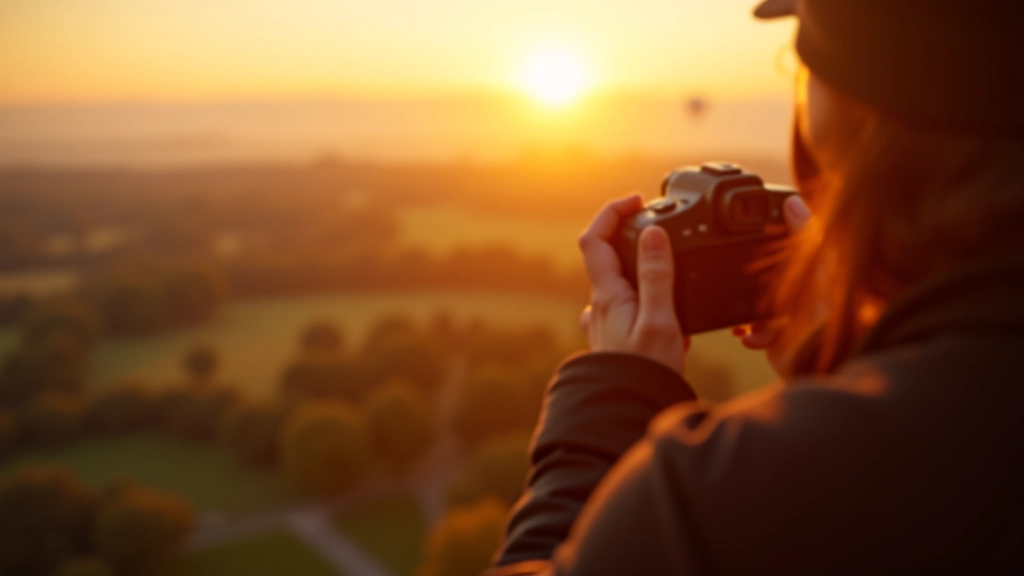
Camera settings that work at altitude, composition tips for landscape shots, and how to document your experience.
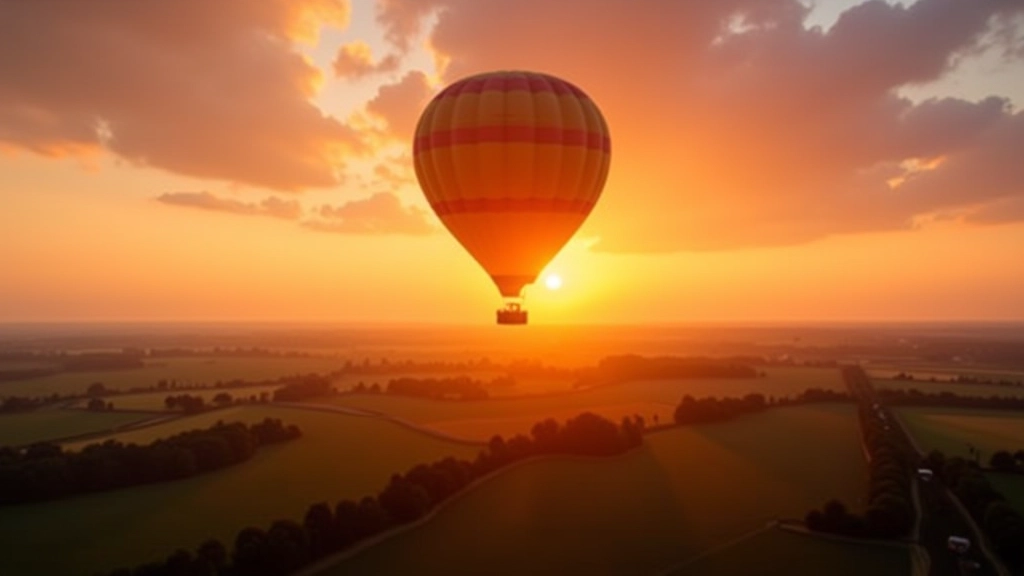
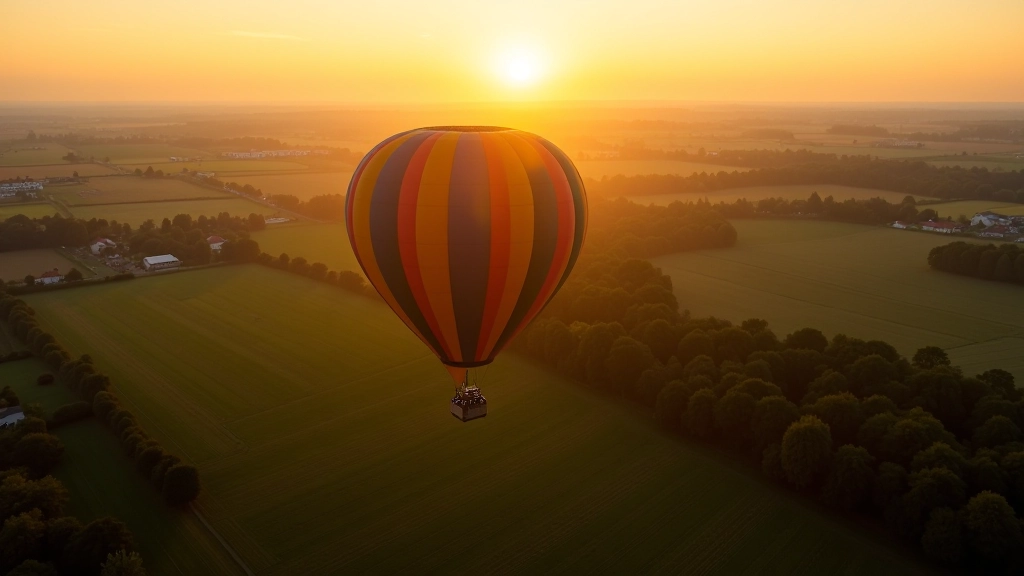
Read MoreYou'll reach cruising altitude around 1,000-1,500 feet, though your pilot adjusts based on wind and conditions. At this height, the taviopath countryside unfolds below you. You'll see the distinctive patterns of fields, the winding roads, the forests that blanket the region. On a clear morning, you can see for miles.
The balloon moves silently. The only sounds are the burner firing periodically and the wind. You're floating with the wind, not fighting it, so there's no noise or vibration. This is when many people get their best photographs. The light at sunrise is golden and soft—photographers call it the "golden hour" for a reason.
Your pilot will point out landmarks. Local villages. Historical sites. You might spot other hot air balloons in the distance on busy mornings. The pilot also shares information about the region—the history of taviopath, the geography below, interesting facts about what you're seeing.

Editorial Team
Written by the taviopath Skies editorial team, focused on honest, practical information about countryside balloon flights and authentic landing experiences.
This guide is informational only and describes typical experiences during hot air balloon flights. Individual experiences vary based on weather conditions, flight paths, and pilot decisions. Always follow all safety instructions provided by your pilot and crew. Hot air ballooning is a recreational activity with inherent risks. Participants should be in reasonable health and consult medical professionals if they have concerns about flying. Weight restrictions and other limitations apply. Check with your specific operator for detailed safety protocols and requirements.
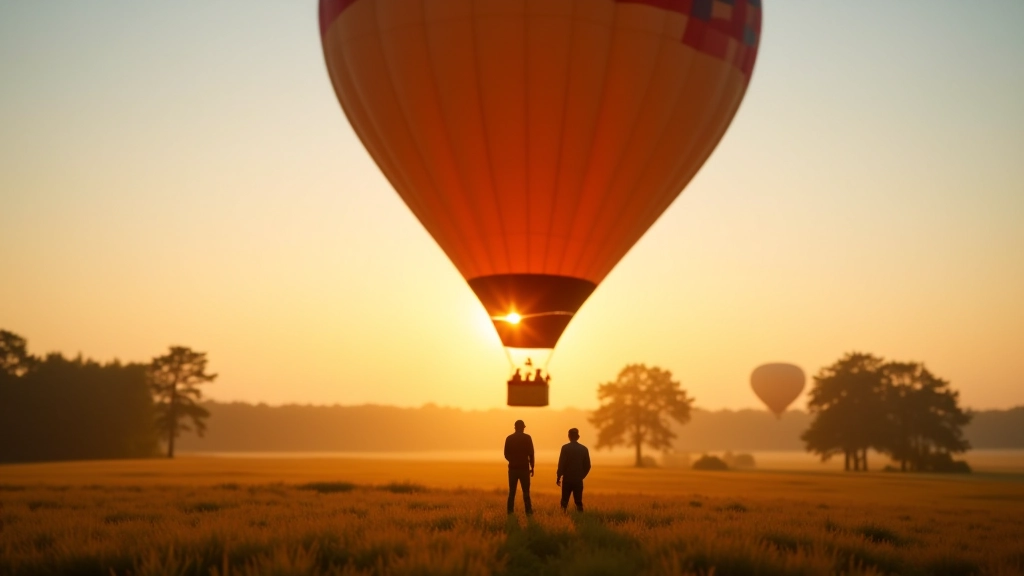
About 45-50 minutes into your flight, your pilot begins planning the descent. You're moving with the wind, so landing requires finding a suitable field ahead. Your crew waits below with a chase vehicle, positioned to guide the pilot toward the best landing spot.
The descent is gradual. You'll hear the burner less frequently as altitude decreases. At around 300 feet, you'll start recognizing details on the ground—individual trees, buildings, people. The landing itself is surprisingly gentle. Your pilot aims for a smooth touchdown, though you'll definitely feel impact. That's why the wicker basket flexes—it absorbs the force.
Ground crew runs out and grabs the basket, securing it. You'll climb out and help pack up the balloon. Most first-timers find this part oddly emotional. You've been floating for an hour. Returning to solid ground feels surreal.
After landing, the crew unpacks the balloon while you head to the champagne celebration. This is the traditional finale. You'll sit in the countryside with your fellow passengers, sipping champagne and reflecting on what you just experienced. It's celebratory but relaxed. Everyone shares their favorite moments from the flight.
You'll get a certificate commemorating your first flight. Some people frame these. Most importantly, you'll have memories that don't fade quickly. Your first sunrise flight isn't just something you do—it's something that stays with you.
By 9:00 AM, you're heading home. The entire experience—arrival to departure—takes about three hours. It's one of those rare experiences that exceeds expectations. The view is genuinely spectacular. The sensation of floating is genuinely peaceful. The whole thing feels like it happened to someone else, even though it was you.
Don't overthink it. Show up early, listen to your pilot, bring a camera, and let yourself be present for the experience. You'll understand why people keep coming back.